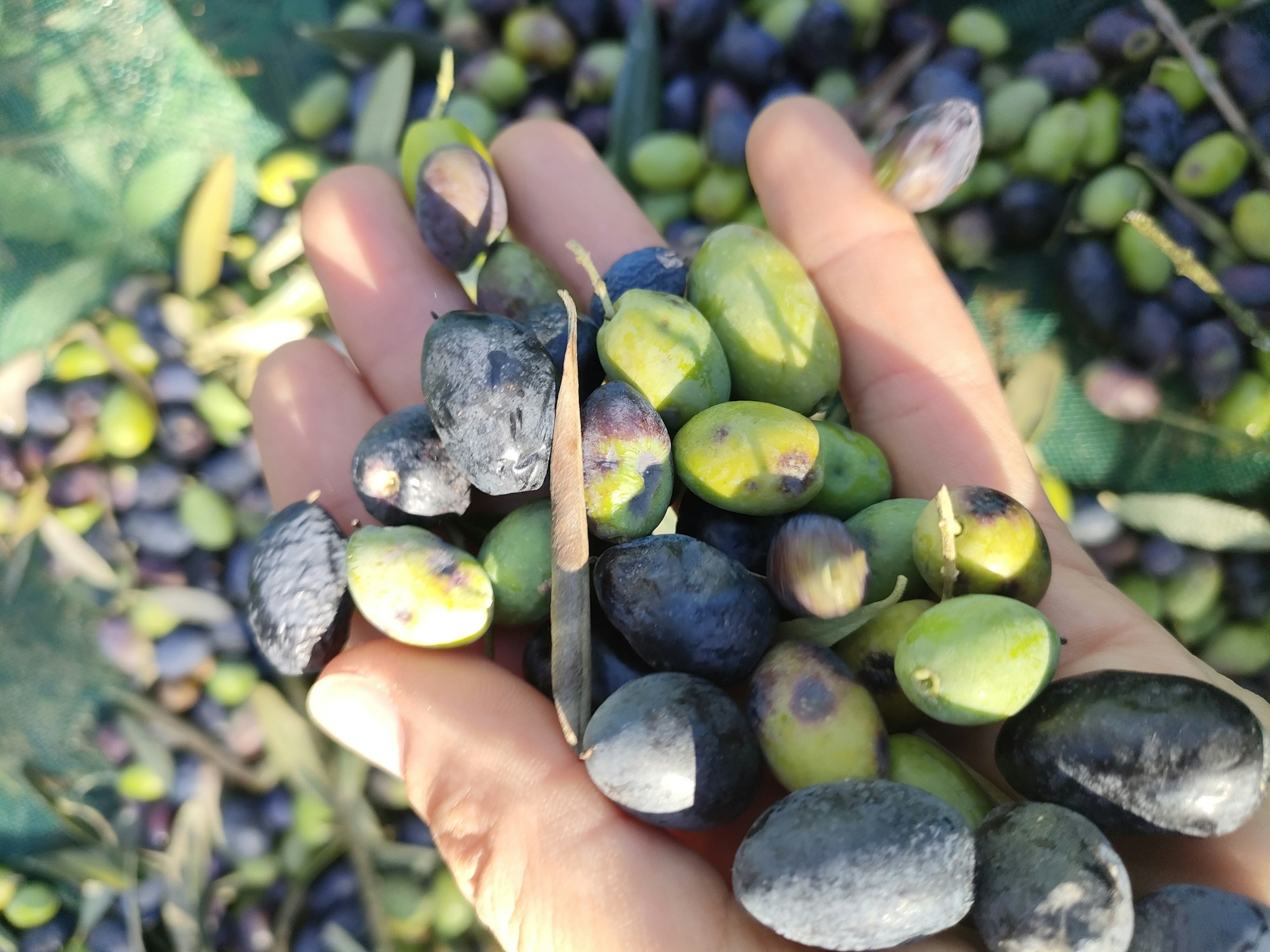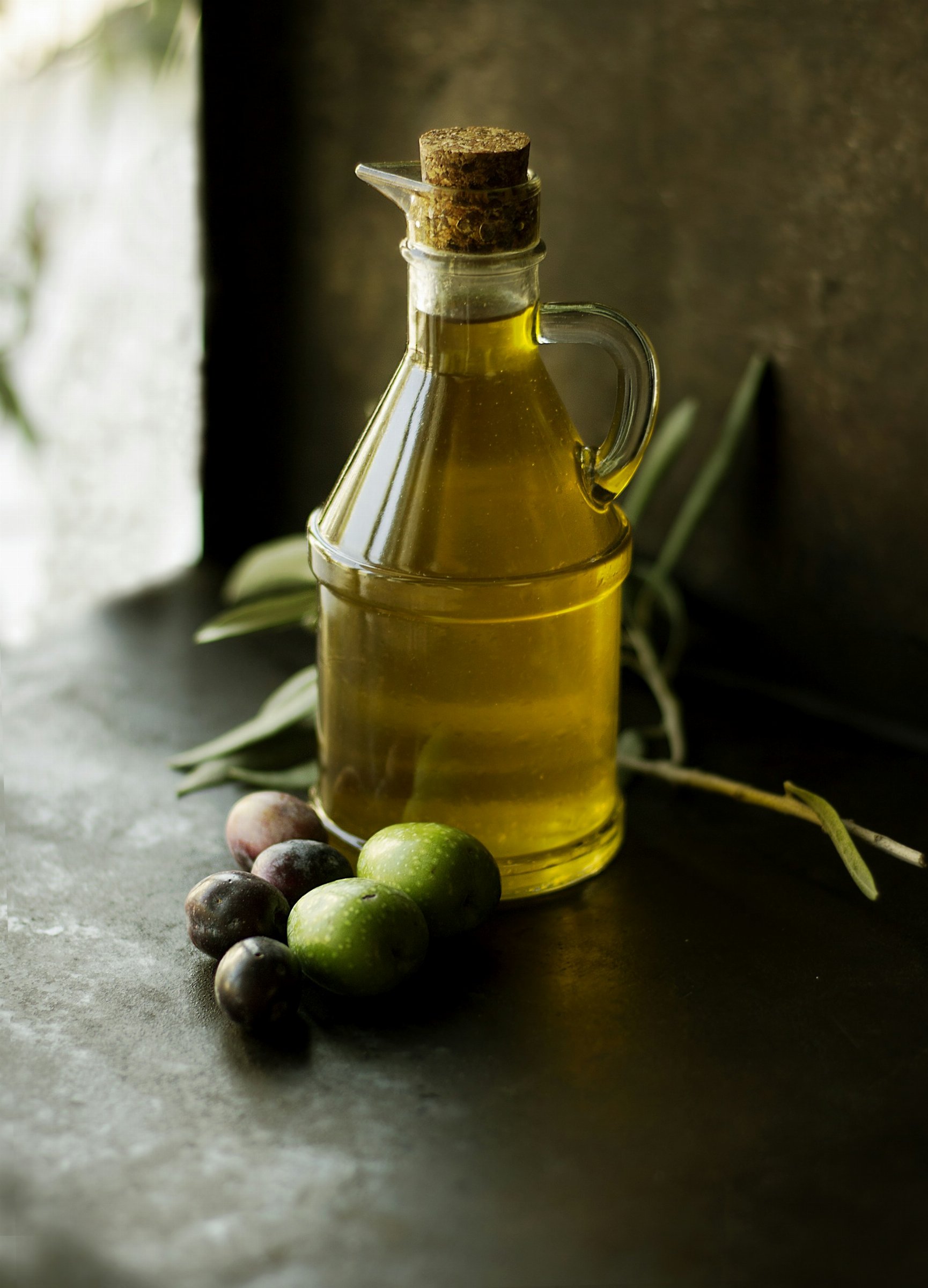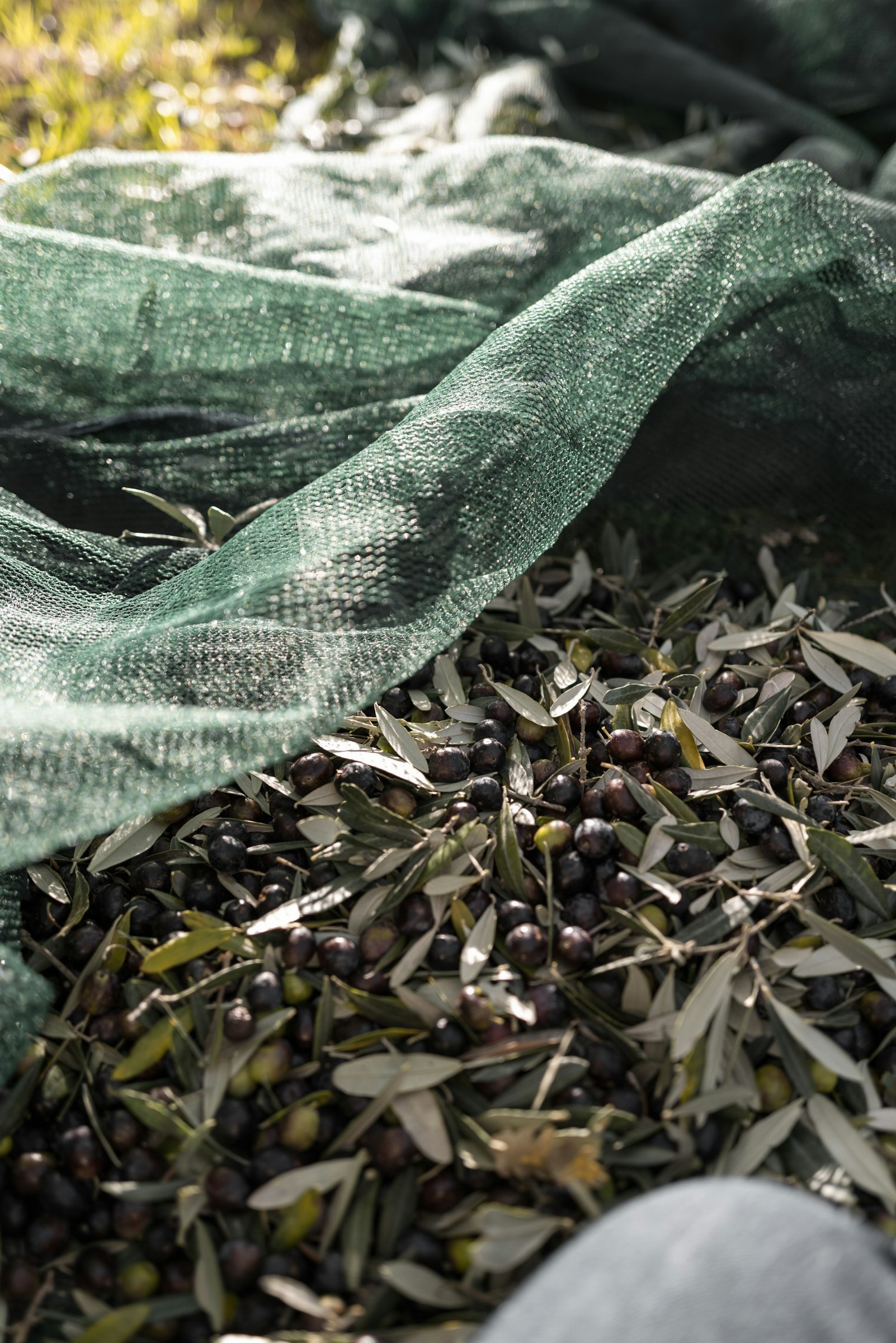
Harvested olives must reach the mill quickly, ideally the same day, as we saw when talking about the harvest. From there the work takes a few hours and uses mechanical means only: extra virgin olive oil is, in the end, a fruit juice.
1. Leaf removal and washing
A blower removes leaves and twigs, then the olives pass through water to wash off soil and dust. It sounds like a detail, but soil left on the olives can be tasted in the oil.
2. Crushing
The olives are crushed whole, stone included, into a paste. Traditional mills use stone millstones; modern mills, which today process most Italian olives, use metal hammer or disc crushers. The stone helps: its fragments act as a drain and make it easier for the oil to come out.
3. Malaxation
The paste is slowly stirred in closed tanks, usually for about half an hour. Tiny droplets of oil merge into larger drops that separate more easily. Temperature matters here: if it rises too much, yield goes up but aromas are lost. To print “cold extracted” on the label, the paste must not exceed 27 °C.
4. Extraction
In continuous mills the paste goes into the decanter, a horizontal centrifuge that separates oil, water and solids by density. A three-phase decanter releases oil, vegetation water and pomace, but needs added water; a two-phase one releases only oil and a wet pomace, with less water and fewer polyphenols washed away. In traditional mills the paste is spread on mats and squeezed in a press, which is where the word “pressing” comes from.
5. Separation and settling
A vertical centrifugal separator removes the last traces of water. The oil comes out green and hazy: it can be bottled like that, unfiltered, or it can be filtered or left to settle so the residues sink. A clear oil keeps longer; an unfiltered one is perfect freshly made but should be used soon.
And the pomace?
Nothing is wasted: the stone fragments are recovered and burned as fuel, and pomace oil is extracted from what remains, but that is a different category with nothing to do with extra virgin oil.
The producers on the portal explain on their pages how they process their olives: their own mill, a cooperative or a trusted local mill. It is one of the best ways to choose the oil to buy in the shop.