The olive is a patient, long-lived tree: it starts producing after a few years and can live for centuries. But good oil comes from work that lasts all year round.
Climate and soil
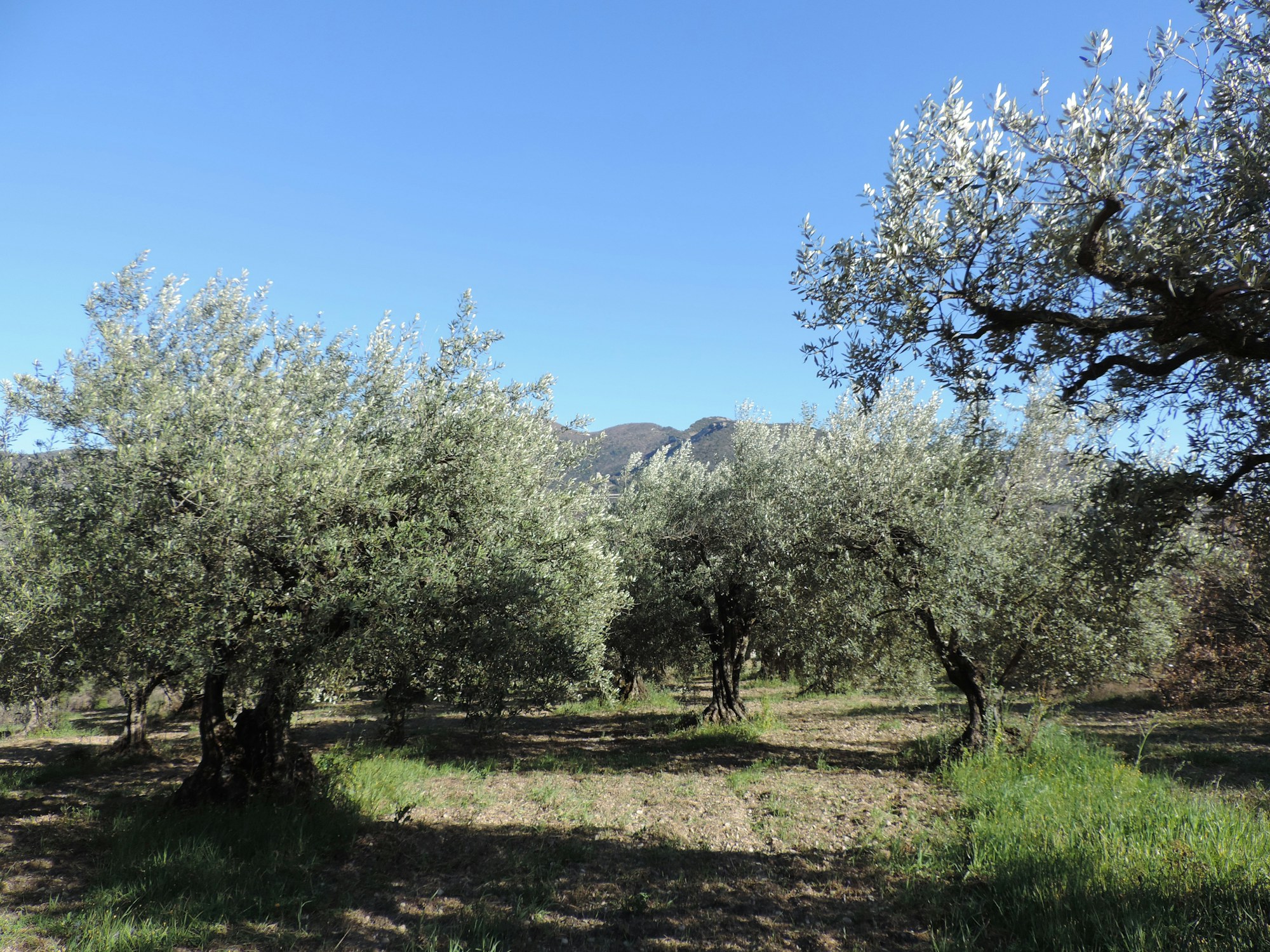
The olive loves the Mediterranean climate: hot, dry summers and mild winters. It tolerates cold down to a few degrees below zero — how far depends on the cultivar — while hard, prolonged frosts damage it. It needs soils that do not hold water: waterlogging is more dangerous than drought.
How it is planted
- Traditional: a few hundred trees per hectare, large and long-lived, often on hillsides and terraces.
- Intensive: more trees per hectare, manageable with harvesting machines.
- Super-intensive: narrow rows like a vineyard, with suitable cultivars and harvesting by straddle machines.
Italy has a unique heritage: more than five hundred cultivars, from Coratina in Apulia to Taggiasca in Liguria, from Frantoio in Tuscany to Pisciottana in Cilento.
Pruning
Pruning is done at the end of winter, once the risk of frost has passed. The aim is to let light and air into the canopy, renew the fruiting branches and keep the tree at a height that makes harvesting easy. In many parts of Italy the most common shape is the polyconic vase.
Water and fertilisation
The olive withstands drought, but suffers if water is lacking at key moments: flowering in spring and pit hardening in summer. Where possible, a little emergency irrigation makes a difference to the yield. Fertilisation follows soil analyses and the expected crop.
Protection
The best-known enemy is the olive fly, which lays its eggs in the fruit: it is controlled with traps and monitoring, and targeted treatments only when needed. Among the diseases are peacock spot on the leaves and, in Apulia, Xylella fastidiosa, which has changed the landscape of Salento.
On years and off years
Olive trees tend to alternate abundant and poor years. Regular pruning and good nutrition reduce this alternation but do not eliminate it: it is one of the reasons why the price of olive oil changes from one year to the next.